Category Server Virtualization

VMware vSphere, Microsoft Hyper-V, Citrix Xen Server, Oracle VM Server, Red Hat KVM.

RHEL Disk Order Problem on VMware vSphere
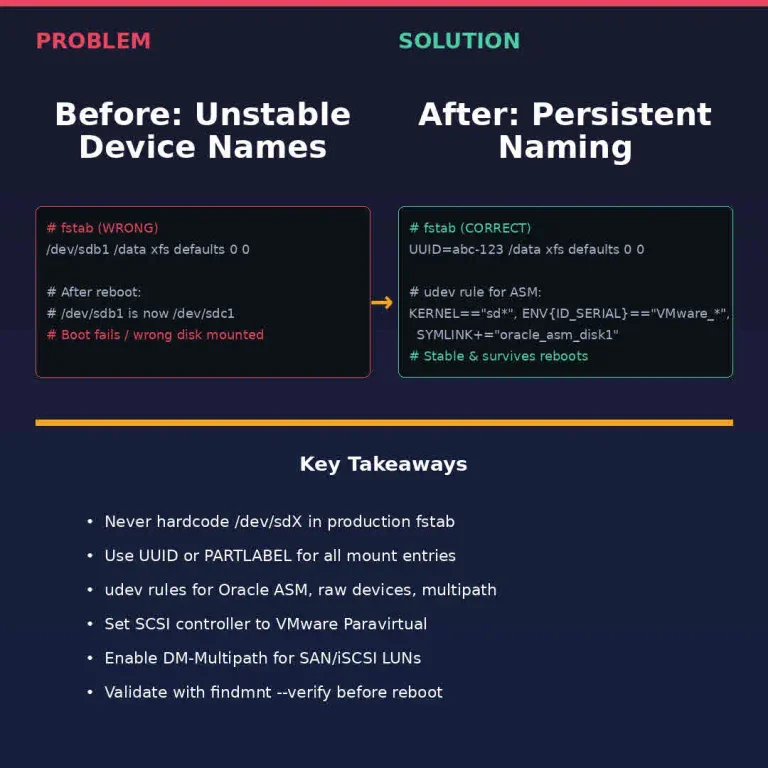
I've been running RHEL on VMware vSphere since ESXi 5.5 in my lab—nested labs, customer environments, production clusters. And there's one gremlin that keeps biting engineers even in 2026: the RHEL disk order problem. You build a VM, attach a few VMDKs, configure your application, reboot, and suddenly /dev/sdb is /dev/sdc. Your database mounts the wrong disk. Oracle ASM can't find its disks. Apache serves files from a stale path. This is not a bug. It's how Linux has always assigned block device names—by enumeration order during kernel boot. But on vSphere the RHEL disk order problem turns acute because VMware's SCSI controller re-presents disks in scan order that can shift between power cycles.
A Comprehensive Guide to Oracle Database Smart Flash Cache: Benefits, Challenges, and Configurations in vSphere, Virtualization, and Physical Environments

In today’s data-driven world, databases are essential for managing the enormous amounts of information generated by businesses. Oracle Database is a leading relational database management system (RDBMS) widely used in various industries. As data grows, so do the demands for performance, efficiency, and cost-effectiveness. This is where Oracle Database Smart Flash Cache comes into play.

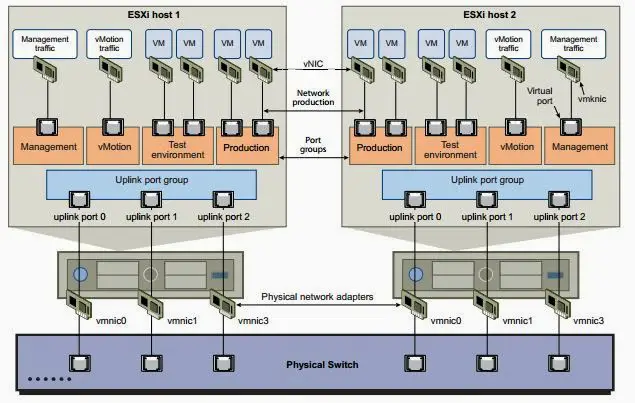
Static Binding vs Ephemeral Binding: Understanding the Network Bindings in VMware vSphere Distributed Switch

Networking is a key component of enterprise virtualization, and as data centers grow, it is imperative to manage network resources effectively and flexibly. VMware's vSphere Distributed Switch (VDS) is a potent tool that allows for centralized management of networking configuration across ESXi hosts, and one of its key features is its management of network port bindings. There are two main types of bindings that are available with VDS: static and ephemeral. Virtualization administrators that want to optimize their environments must grasp the distinctions, benefits, and trade-offs between static and ephemeral port binding.

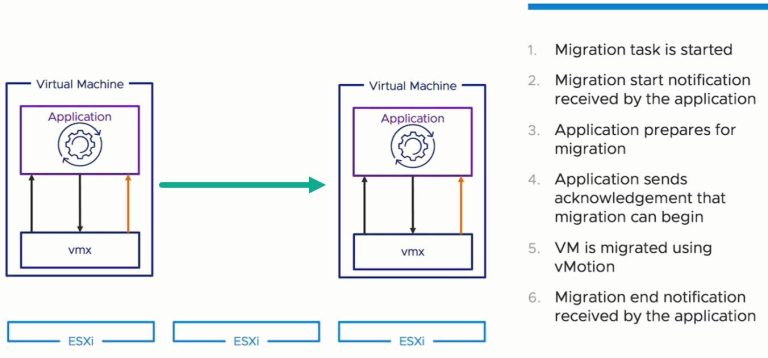
A Deep Dive into VMware vSphere vMotion Application Notification: Keeping Applications in the Loop

Ensuring application availability and performance during infrastructure maintenance is essential in the ever changing virtualization landscape. VMware's flagship product, vMotion, allows virtual machines (VMs) to be moved between physical hosts without interruption. How about the programmes that are executing in such virtual machines? Can they be told that the relocation is coming and given enough time to be ready?

Now for vMotion Application Notification, a revolutionary feature that debuted with vSphere 8. By giving apps the ability to actively participate in the vMotion process, this feature improves resiliency and reduces migration interruptions. Let's investigate the advantages, settings, and best practices of this cutting-edge technology in more detail.