Category Operating System

An operating system (OS) is system software that manages computer hardware and software resources and provides common services for computer programs.

RHEL Disk Order Problem on VMware vSphere
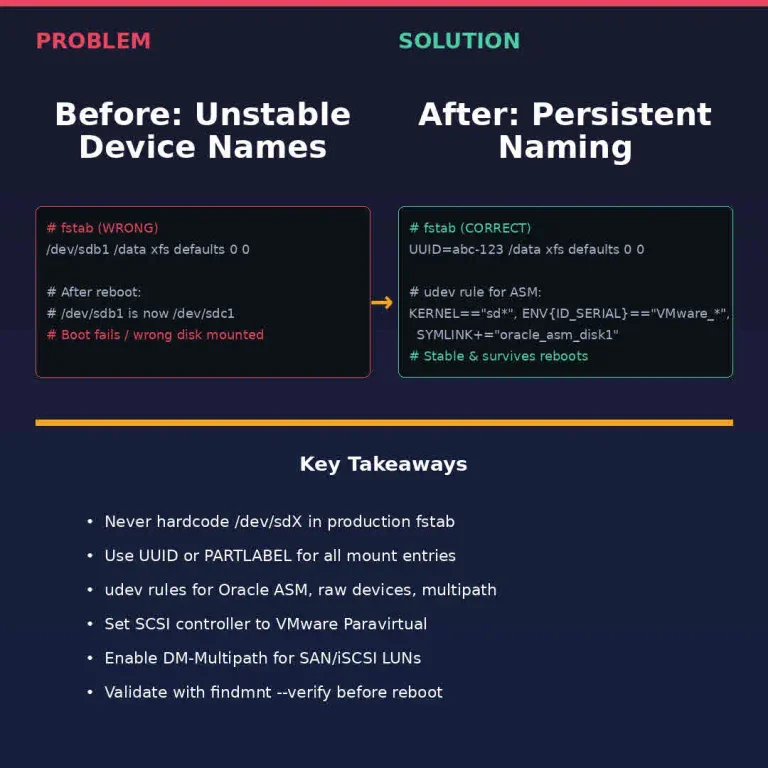
I've been running RHEL on VMware vSphere since ESXi 5.5 in my lab—nested labs, customer environments, production clusters. And there's one gremlin that keeps biting engineers even in 2026: the RHEL disk order problem. You build a VM, attach a few VMDKs, configure your application, reboot, and suddenly /dev/sdb is /dev/sdc. Your database mounts the wrong disk. Oracle ASM can't find its disks. Apache serves files from a stale path. This is not a bug. It's how Linux has always assigned block device names—by enumeration order during kernel boot. But on vSphere the RHEL disk order problem turns acute because VMware's SCSI controller re-presents disks in scan order that can shift between power cycles.


Oracle Linux Automation Manager: Supercharge Your IT with Intelligent Automation

Spreading infrastructure and constantly shifting needs in today's IT environment may easily convert system administration into a wild beast. Manual setups become laborious and prone to errors, which impedes creativity and agility. This is where automation becomes useful, providing your IT environment with a potent tool to tame the beast and restore order.

Let me introduce you to Oracle Linux Automation Manager (OLAM), a powerful tool that makes infrastructure provisioning, configuration management, and deployment procedures much easier. Based on the open-source giants Ansible and AWX, OLAM provides a centralized web interface for effective management and visibility into your IT environment.

Demystifying JBD2: The Guardian Angel of Ext4 Filesystems

Data integrity is critical to the digital world. The backbone of this world, filesystems, are essential to the organization and security of this data. Ext4 is the most popular filesystem among them all because of its efficiency and dependability. But the JBD2 journaling layer is a secret weapon that powers its success.

This blog article explores the world of JBD2, including its features, goals, and effects on Ext4. We will make complex topics understandable to readers with different degrees of technical competence by navigating through them in a straightforward and simple manner.

I/O Block Size (> 3 MB) Best Practice on EMC AFA/HFA and Linux (Physical and Virtual)

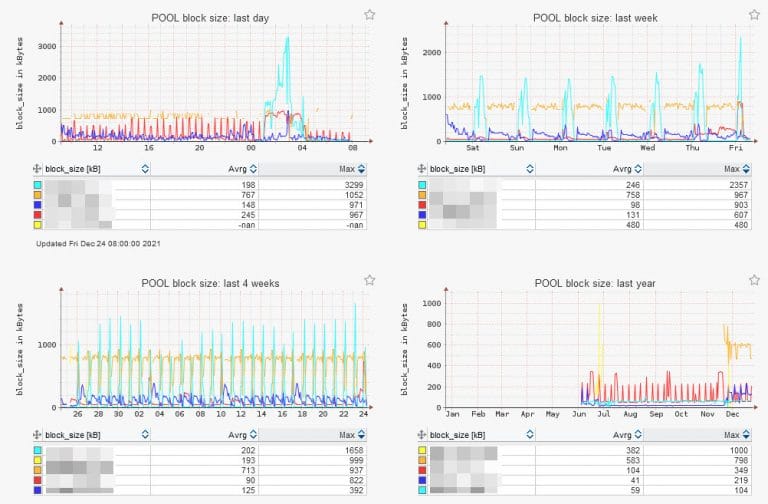
We have a problem on our Oracle Database servers which are hosting by Oracle Linux servers, when Oracle Databases putting to Maximum Availability protection mode, some workloads impacts performance whole database ecosystem. The workloads are related to some tasks which performed from by application servers and the tasks needs huge read/write I/O on storage arrays. We are using DELL EMC Unity/Unity XT (All Flash/Hybrid Flash) family in most of projects. I did lots of searches and found nothing at first step. I had only one clue, I/O block size was very large during performing tasks by database servers.

Windows Updates Remotely: Download and Install via PSWindowsUpdate PowerShell Module

PSWindowsUpdate

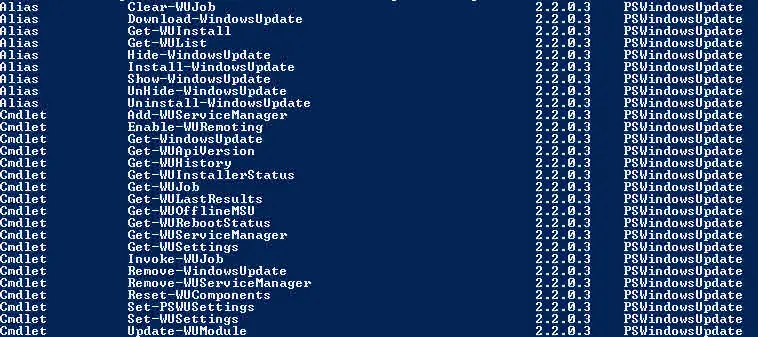
Operating system is the core of any system and we have to keep operating system update cause of preventing performance issues, unplanned downtime and fix security vulnerabilities. Windows (client and servers) has a standard terminology for receiving updates monthly and most of organizations using Windows Server Update Services to applying updates of multiple servers/client. Updates would be downloaded and installed on multiple servers/clients automatically but service downtime is always the biggest concern but another concern is installing updates on multiple machines and rebooting systems during planned downtime. PowerShell and WinRM would help us when they come as PSWindowsUpdate PowerShell module!