Category: Data Center

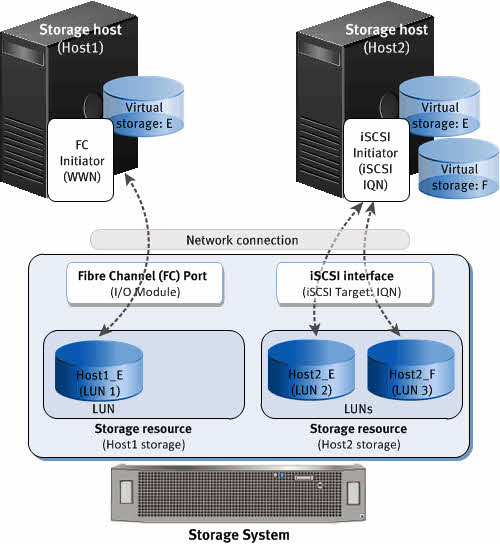
iSCSI vs Fiber Channel 0

Guest Connected vs RAW Device Mapping (RDM)

RAW Device Mapping (RDM) is one of oldest VMware vSphere features which introduced to resolving some limitation on virtualized environments such as virtual disks size limitation and deploying services top of fail-over clustering services.

You can use a raw device mapping (RDM) to store virtual machine data directly on a SAN LUN, instead of storing it in a virtual disk file. You can add an RDM disk to an existing virtual machine, or you can add the disk when you customize the virtual machine hardware during the virtual machine creation process.
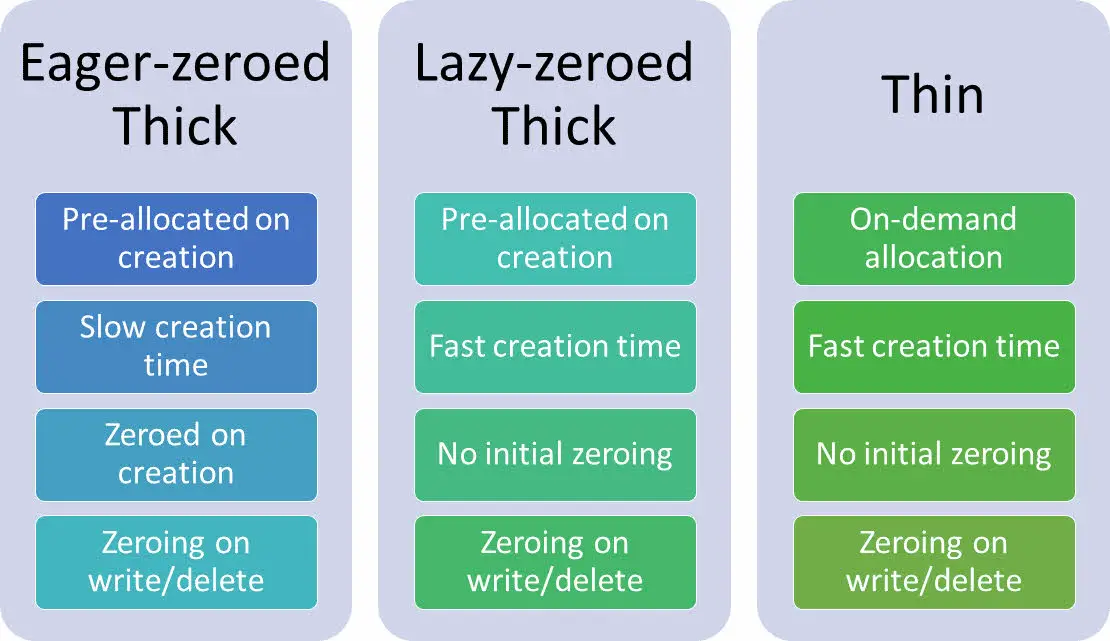
Provisioning Types Comparison 0

VMDK Write Performance on Different Provisioning Types

VMDK (Virtual Machine Disk) has been designed to mimic the operation of physical disk. Virtual disks are stored as one or more VMDK files on the host computer or remote storage device, and appear to the guest operating system as standard disk drives.

VMware supports three provisioning types:

Thin Provisioned
Thick Provisioned
Eager-zeroed Thick Provisioned

0

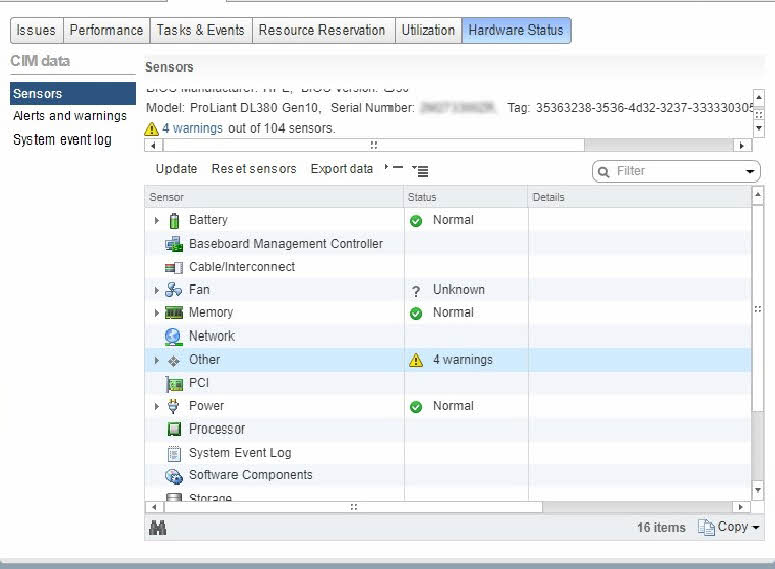
Hardware Status Problem on HPE ProLiant Gen10

The Hardware Sensor Status Reported in the vSphere Web Client Do you have any HPE ProLiant Gen10 on your virtual environment? Did you upgrade their iLO firmware to 1.30? If you have the servers with upgraded iLO firmware, you may face with the below status on Hardware status tab in vSphere Web Client: VMware vSphere 6.0 VMware vSphere 6.5 VMware vSphere 6.7 Good news, HPE engineers are working on this issue and it has no impact on production. It can be safely ignored but I recommend that install the new firmware after release.

HPE Serviceguard for Linux 1

HPE Serviceguard for Linux

HPE Serviceguard for Linux (SGLX), a high availability(HA) and disaster recovery (DR) clustering solution, increases uptime for your critical applications by protecting them from a multitude of infrastructure and application faults across physical or virtual environments over any distance. It reduces the impact of unplanned downtime with no compromise on data integrity and performance. Furthermore, it helps achieve near zero planned downtime for maintenance.