Operating System Level Virtualization (Part 2) – Implementations Comparison
Linux Container

These days, everyone knows what's Cloud Computing and cloud based services are using for speedup deployment of organizations services. Operating System Level Virtualization or Containers helping system architectures and administrators to achieve the goals. There are many implementations for containers that today, those methods are compatible with different hardware architectures and operating system.

You may know that Unix has OS Level Virtualization from past years and this technology is very older than other virtualization such as Full Virtualization or Paravirtulization.

Full Virtualization (VMware ESXi, Hyper-V) and Paravirtualization (Xen, UML) provides different guest OS but there is no way to use different guest OS when you are using containers. Of curse, some solutions are under development.

NTP Software Implementations Comparison

This post is about NTP Software implementations actually, but I have to write some words about NTP. NTP is an angle for financial applications, actually some of services such as banking services are very depended to clock synchronizations protocols. NTP is an ancient thing, it is more than 30 years old and even older than Windows 7 and Windows XP.

HPE Management Component Pack (MCP)

HPE

HPE Management Component Pack or HPE MCP provides agent software for use on community-supported distributions. The MCP (unlike the SPP) does not provide drivers and firmware (firmware is provided via HPSUM, and drivers are provided by the distribution vendors). The Linux Service Pack for ProLiant provides updated drivers and agent software for use on RedHat Linux and SUSE Linux Enterprise Server.

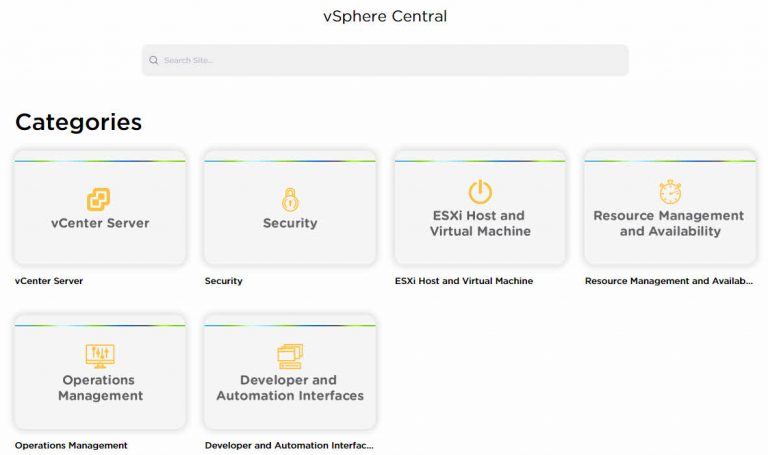
vSphere Central, The Messenger of God

vSphere Central Categories

vSphere Central brings together a variety of technical assets from VMware that helps users understand how vSphere works, how to implement various features, plan upgrades, and more.  With content in a range of formats, including text, video, and rich media tools such as walk-through demos, the goal is to be a one-stop shop for original and curated technical content on vSphere.

Guest Connected vs RAW Device Mapping (RDM)

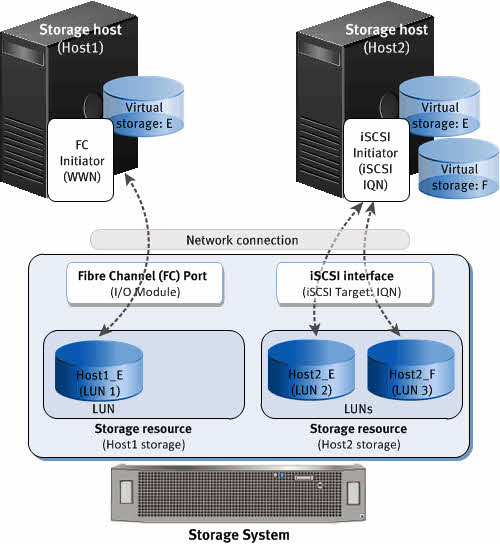
iSCSI vs Fiber Channel

RAW Device Mapping (RDM) is one of oldest VMware vSphere features which introduced to resolving some limitation on virtualized environments such as virtual disks size limitation and deploying services top of fail-over clustering services.

You can use a raw device mapping (RDM) to store virtual machine data directly on a SAN LUN, instead of storing it in a virtual disk file. You can add an RDM disk to an existing virtual machine, or you can add the disk when you customize the virtual machine hardware during the virtual machine creation process.